Climate
Garage Gym Climate Control: What to Fix First
Fix a garage gym in order: stop liquid water, seal and insulate, size heating or cooling from the shell, then dry the air.
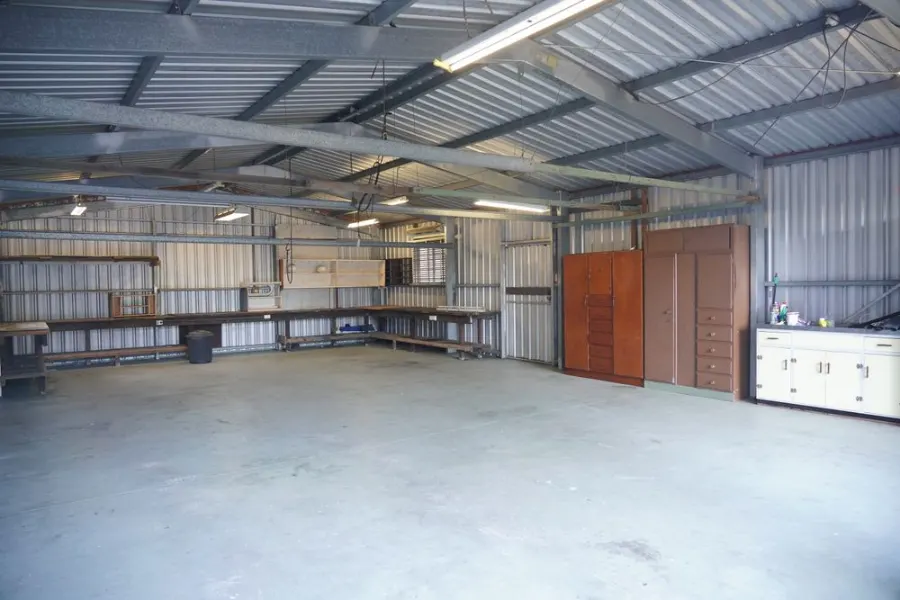
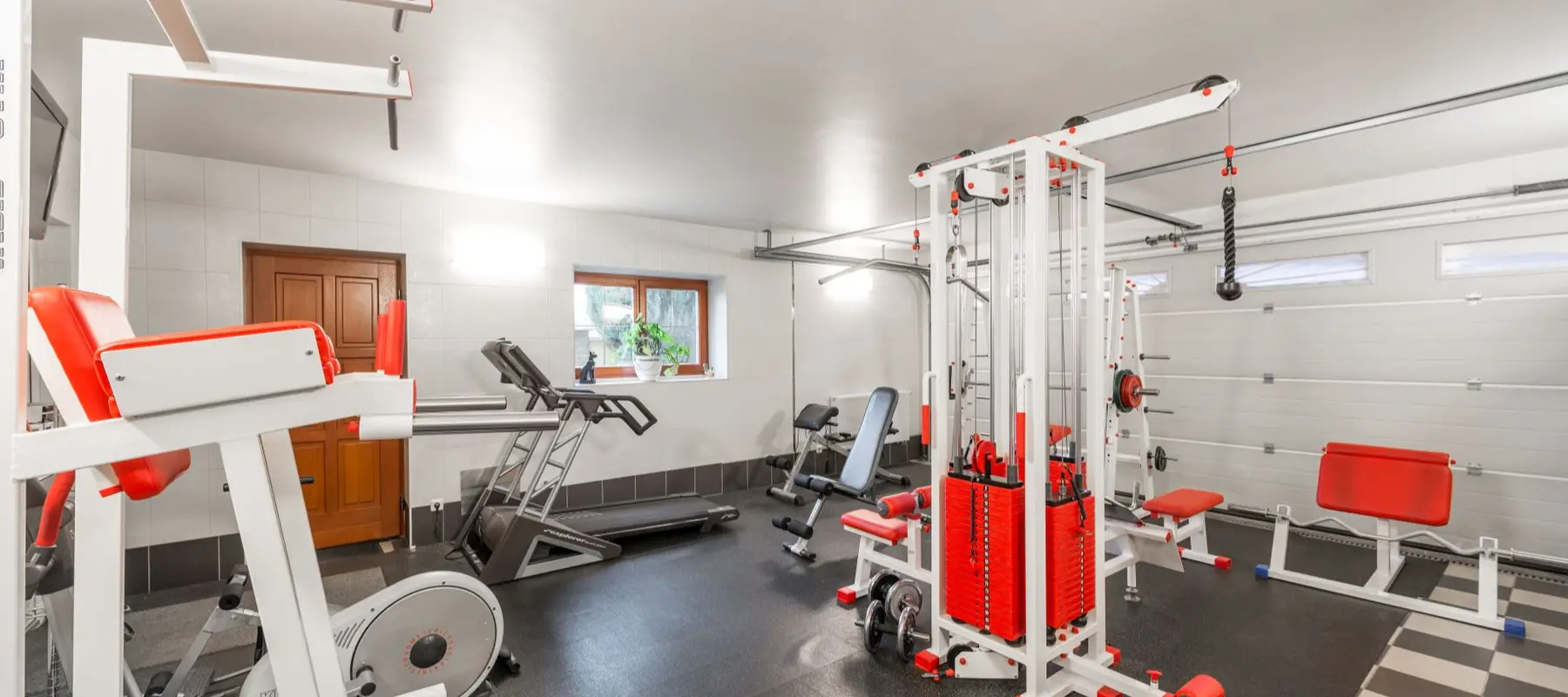
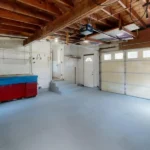
The rack is up and the floor is down, yet the room is freezing in January and an oven in August. Garage gym climate control works in one order: stop liquid water, seal and insulate the shell, size heating or cooling from it, then dry the air so the bar stops beading.
Every figure is a planning calculation, not a test; how we evaluate guides explains the checks.
Gas, refrigerant, new circuits and mold need licensed pros, and your manual outranks this page. Each fix has its own guide in the Climate guides.
How do you heat and cool a garage gym?
Fix the shell before the equipment. Stop liquid water, seal and insulate, size heating or cooling from what the shell loses or gains, then control damp air. Buy a heater or cooler first and you size it for a leaky box, then pay to run it.
- Stop liquid water: roof leaks, gutters, a wet slab
- Seal gaps, then insulate walls, ceiling and door
- Size heating or cooling from what the shell leaks
- Control damp air, then protect bare steel
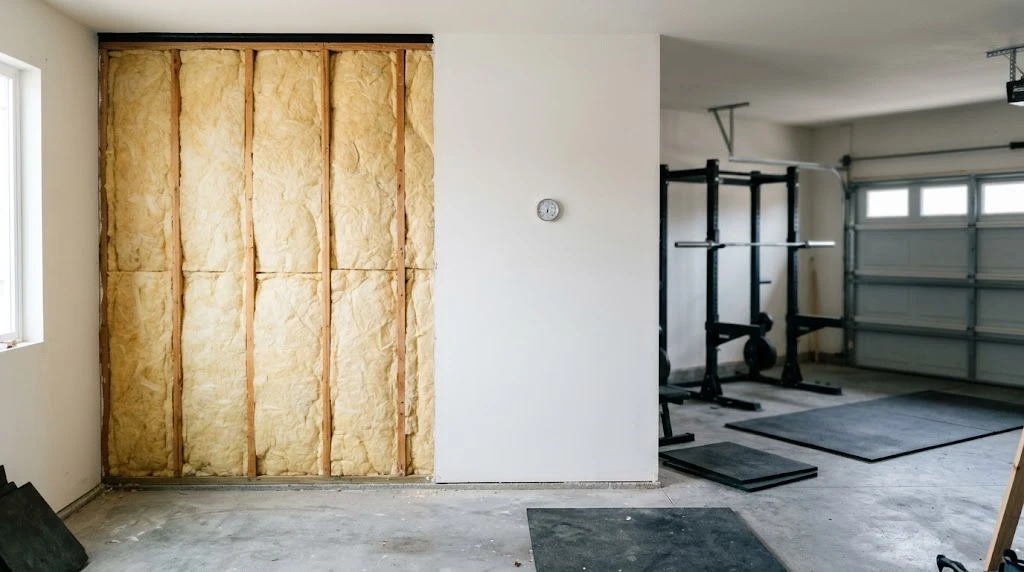
Step 2 comes before any purchase, because it changes every size that follows. Should you insulate your garage gym? Usually yes, if you will heat or cool it for weeks each year and the walls, ceiling and door are bare; which insulation job to do first covers the order.
Which fix fits each complaint?
Every complaint starts with the same two fixes: stop liquid water, then seal and insulate. After that the path splits by complaint: the table below gives each next step, with the bare and insulated numbers side by side for one two-car garage.
| Complaint | Then do this | Bare vs insulated, two-car |
|---|---|---|
| Too cold | Size a heater from the shell | 30,413 vs 5,039 BTU/h |
| Too hot | Shade, seal and move air, then size cooling | 26,786 vs 6,271 BTU/h |
| Too damp | Measure humidity, then dry the air | 46 vs 17 pints a day |
| Rust | Lift steel off the slab, then wipe and oil | Follows the damp row |
My own calculation for one 20 × 20 ft garage, a planning estimate and not a test. BTU/h means heat moved per hour. Heat: 55°F inside, 15°F outside. Cooling: 75°F inside, 95°F outside, with sun and two trainers. Water: 80°F, outside air at 70% humidity, air only.
Insulating and sealing cuts the heat load 83%, the cooling estimate 77% and the water carried in 63%.
How do you size heating and cooling?
Size from the shell’s heat loss and heat gain, not floor area. Take the larger of the winter and summer loads, then pick the next unit size up. The BTU sizing guide for garage gyms runs the winter sums step by step.
Cold: replace the heat that leaks out
Match the heater to the heat the garage loses, then match the circuit to the heater. A 1,500-watt electric heater only just covers the insulated two-car garage, while the bare one needs about 8,900 watts. Anything larger often needs its own 240-volt circuit, so ask a licensed electrician. Fuel-burning heaters need fresh air and a working carbon monoxide alarm.
Hot: block the heat that leaks in
Cut heat gain first, then size cooling for what remains. Sun on the roof and door and two trainers drive the summer estimate, so shade the door, seal the gaps and move air before you buy a cooler. Cooling a garage gym without AC covers fans and shade. Leave refrigerant lines to a licensed HVAC contractor.
How do you fix damp air and rust?
A garage turns humid when outside air leaks in or something adds water: a wet slab, a roof leak, damp gear or an unvented fuel heater. Find where the water comes from before you dry the air. Test the slab for moisture, fix leaks, seal gaps, then log humidity for a week.
A good humidity level depends on your coldest metal. Aim for a dew point at least 5°F below it; the dew point is the temperature where air starts dropping its water. A 45°F bar in 60°F air needs relative humidity (RH), the share of water the air holds, under about 47%.
Read a hygrometer, a small humidity gauge, near the gear, not by the door. The 5°F margin is my planning rule, not a standard, and cheap gauges can read several points off.
Does gym equipment rust in a garage? Often, because water on bare steel causes rust, not the garage itself. Lift steel off the slab, keep air moving and wipe sweat away; why equipment rusts and which parts to retire covers the rest.
Does your climate change the order?
The order stays the same in every US climate. The climate only decides which load dominates, and so which later step costs the most. These notes are my judgment, not a calculation, so run the winter and summer sums for your own weather.
| Climate | What dominates | Lean on first |
|---|---|---|
| Cold | Winter heat loss | Insulation, then a heater |
| Hot and dry | Sun on the roof and door | Shade, sealing and airflow |
| Hot and humid | Water in the air | Measuring, then drying or cooling |
| Mild | Short seasons | Fixing only the one complaint |
In a cold climate, compare propane and electric heaters only after the shell is fixed. An attached garage shares a wall with the house, so it usually loses less than the two-car example; treat that example as an upper bound.
When can you skip a fix?
Skip a fix when its problem is not yours, but do not skip stopping liquid water or the safety checks. Each purchase earns its cost only when the complaint is real and the shell is ready for it. These calls are my judgment, not a calculation.
- Insulation: skip it if you do not run a heater or cooler
- Heater: skip it if you train only in mild weather
- Mini split: skip it if you rent or the hot season is short
- Dehumidifier: skip it while humidity stays under target
Recheck a skipped fix if the complaint returns for more than a few weeks a year. If none of these apply and you want one unit for both seasons, size a mini split from the shell before you ask for quotes.
FAQ
Can you put heating and cooling in a garage?
Yes, if the garage has the space and the power. A plug-in heater needs a circuit that can carry it, so check what the garage circuit can carry. Gas lines, refrigerant lines and new circuits are licensed work.
Can you air condition a garage gym?
Yes, with the right type for your garage and climate. A bare garage makes any type undersized and costly to run, so seal and insulate first, then compare air conditioner types for a garage gym by size, venting and power.
Do I need a dehumidifier in my garage gym?
Only if humid air is the cause: readings stay above target while the slab, roof and walls are dry. It cannot dry a wet slab or stop a leak. Size a dehumidifier by daily water load once the water is stopped.
Does a garage need ventilation?
It needs fresh air wherever fuel burns or a car runs, plus a carbon monoxide alarm. For moisture, open the door or run a fan only when the outside dew point is lower than the garage’s, or you bring water in. Local rules vary.
Final thought
Garage gym climate control is a sequence, not a shopping list. Stop liquid water, seal and insulate, then size heating or cooling from the shell and dry the air that is left. Start with the biggest complaint in the table, open its guide and take the insulation numbers with you. Hand gas, refrigerant and wiring to licensed pros.
More planning guides sit on the guides page.
How we wrote this guide
Most figures come from the calculations in the linked guides, which state their assumptions. My own calculation adds the 77% summer cut and the watts conversion. I have not tested any heater, cooler, dehumidifier or garage. Gas, wiring, refrigerant, mold and building rules vary by location, so follow your manual and ask a licensed pro.
Which fix does your garage need first?
Send your garage size, insulation and coldest training day, and I will tell you which numbers to check.
Write to me