Humidity
Dehumidifier for Garage Gym: Do You Need One?
A dehumidifier treats humid air, not leaks. In my example, sealing cuts a garage’s moisture load from about 46 pints a day to 17.
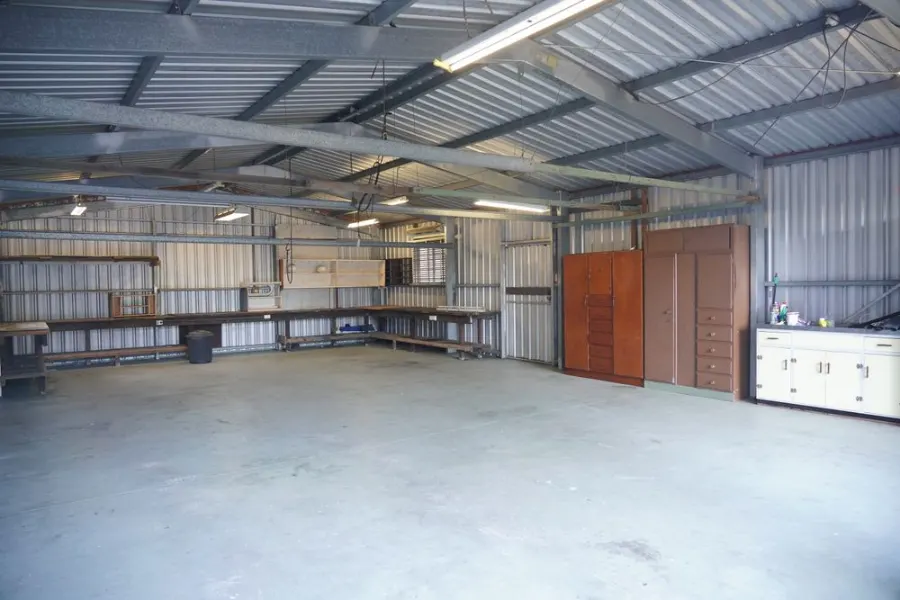
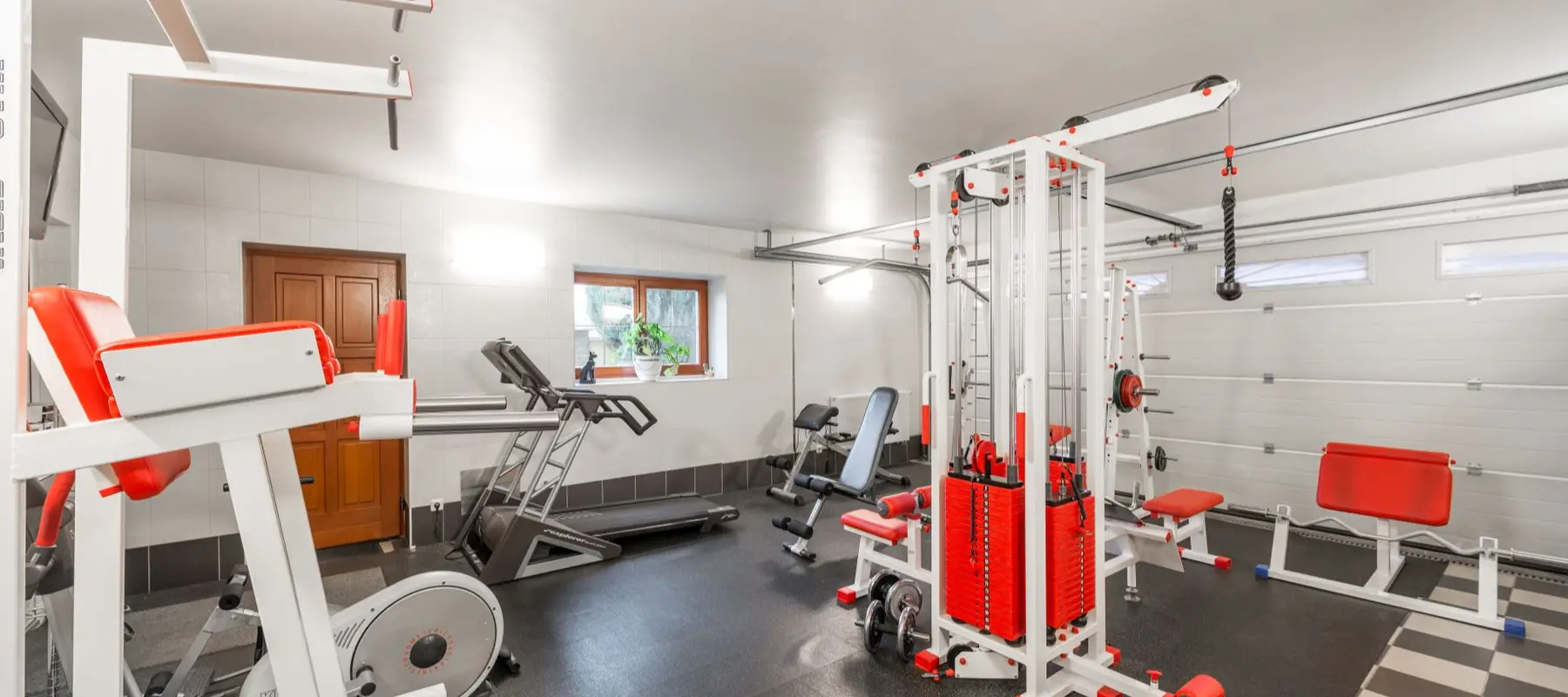
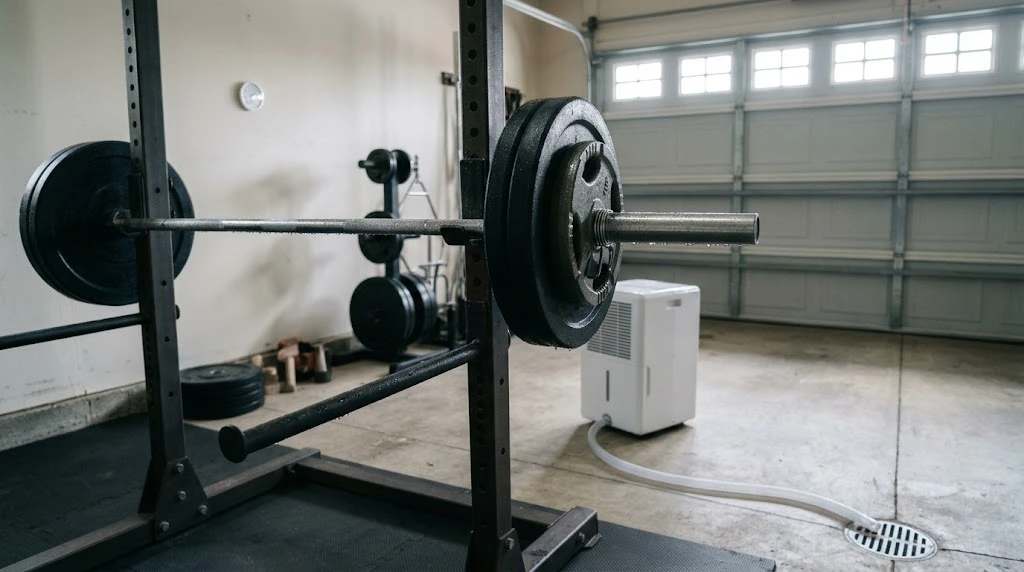
A bar that beads with water overnight, a film on the plates and a musty smell send people shopping. A dehumidifier for garage gym use works only when humid air is the source. If liquid water keeps arriving, the machine just fills a bucket while the leak carries on.
Measure first, then size. Every figure here is my own planning calculation, not a test; how we evaluate guides explains the method.
Visible mold, a wet slab and wiring questions need a qualified pro, and the maker’s manual outranks this page. Heater and circuit guides sit in the Climate guides.
Do you need a dehumidifier in a garage gym?
You need a dehumidifier for garage gym use when humid air, not liquid water, is the problem. Readings stay above your target most of a week, and the slab, roof and walls are dry. A dehumidifier treats air only. It cannot dry a wet slab or stop a leak, so water coming in comes first.
Air is the likelier source when the signs follow the weather. Look for beads on the bar after a muggy night, a film on plates, or a musty smell with no wet patch to blame. New rubber mats smell strong too, but that is a separate problem, and odor is one thing to weigh in cheap flooring.
Fix the water source first if you see:
- Puddles or damp patches after rain
- A dark slab corner that never dries
- Stains or drips under the roof or door
- A floor drain that backs up
A unit cannot outrun water that keeps arriving, so test the slab for moisture before you buy one.
How do you know the garage is too humid?
Measure it. A hygrometer, a small gauge that reads relative humidity (RH), shows how full the air is. Log it morning and evening for a week, away from the door. Then compare the dew point, the temperature where air starts giving up water, with your coldest metal or concrete. Surfaces at or below it collect water.
| Air temperature | 50% RH | 60% RH | 70% RH |
|---|---|---|---|
| 45°F | 27°F | 32°F | 36°F |
| 60°F | 41°F | 46°F | 50°F |
| 75°F | 55°F | 60°F | 65°F |
Formula, with T in °C: g = ln(RH ÷ 100) + 17.625 × T ÷ (243.04 + T), then dew point = 243.04 × g ÷ (17.625 − g). Table values: my own calculation, in °F.
A musty smell strongest at the slab edge or under a mat can mean moisture below. Lift a corner; if the underside is wet, compare floor types for a damp slab.
What humidity should you aim for?
Aim for a dew point at least 5°F below your coldest metal or concrete surface. If a thermometer on the bar reads 45°F in a 60°F garage, keep RH under about 47%. The 5°F margin is my planning rule, not a standard, and cheap hygrometers can read several points off. Heating lowers RH but not the dew point, and how unvented propane heaters add water vapor shows why a fuel heater can make it worse.
When are sealing and airflow enough?
Sealing and airflow are enough when your readings reach target without a machine. Open the door or run an exhaust fan only when the outside dew point is lower than the garage’s. At 80°F and 70% RH outside, the dew point is 69°F, far wetter than a 65°F garage at 70% RH, which sits at 55°F.
Seal first, because every air change carries water in: seal the gaps and insulate before you spend on a unit. The next section shows how much that cuts the load.
A fan that only stirs the air removes no water. A ceiling fan also hangs below the ceiling you measured, so check how much headroom a home gym needs first.
The order that works:
- Stop liquid water: roof, gutters, slope, slab
- Seal gaps and insulate
- Ventilate only when the outside dew point is lower
- Add a unit sized to the load that remains
- Log readings for another week
What size dehumidifier for a 2 car garage?
Size it by moisture load, not square feet. In my planning example, a 20 × 20 ft garage on a muggy day takes in about 46 pints of water a day when leaky and about 17 when sealed. Choose a unit whose maker-stated daily removal, at your garage’s temperature, clears that load.
| Garage | Air changes an hour | Water in, pints a day |
|---|---|---|
| Leaky | 2 | 46 |
| Sealed | 0.75 | 17 |
My own calculation: 80°F inside and out, outside air at 70% RH, a 50% target, 3,200 cubic feet and the same air-change values as the BTU guide. At 80°F, air holds 7.7 grains of water per cubic foot at 70% RH and 5.5 at 50% (a grain is 1/7,000 lb).
One air change carries in about 1 pint; drying the room’s own air once removes only that same pint. Sealing cuts the incoming water by about 63%.
Compare the load with the maker’s pints per day and the conditions behind that rating. A unit that only just meets the load runs nonstop.
The estimate sees air only. A wet slab, a roof leak, damp cars and wet gear add water it cannot count. If the bucket fills far faster than my figure, look for a water source before buying bigger; that is my judgment, not a calculation.
How should you drain and place the unit?
Choose the drain before the unit, because the drain decides where it can stand. Then put it in open air on a hard floor with the garage door shut. Your daily load from the last section sets how often a bucket would need emptying.
Bucket, gravity hose or condensate pump?
Choose a bucket for a light load, a gravity hose when water can run downhill to a drain, and a condensate pump when it cannot. Divide a bucket’s stated capacity by your daily pints to see how often you will empty it. A hose must slope downhill all the way and can freeze in a hard cold snap. A pump lifts water to a sink or outdoors and needs power.
Where should it go in the garage?
Put the unit in open air, on a hard, level floor, with clearance around its vents as the manual states. Keep it off carpet, which soaks up spills and holds damp; see flooring over carpet.
Plug it into a wall outlet. Check the label watts against what a garage circuit can carry, because a heater on the same breaker can trip it. Ask a licensed electrician if unsure.
FAQ
Can a dehumidifier be used in a garage?
Yes, if the maker’s stated operating range covers your garage’s temperatures and the drain is planned. In my judgment, most problems come from cold air, a leaky shell or a wet slab, not the garage itself. Check the manual first.
Will a dehumidifier work in a cold garage?
It may run but removes less: cold air holds little water, 2.1 grains per cubic foot at 45°F and 60% RH against 5.7 at 75°F. Many compressor units frost or pause in the cold, so check the maker’s range. Desiccant types often suit cold rooms.
Is a dehumidifier or air conditioner better?
Match the tool to the complaint. An air conditioner cools and removes some moisture; a dehumidifier targets moisture and adds a little heat. For damp air in a cool garage, use the dehumidifier. If heat is the main complaint, cooling may handle both jobs.
Final thought
Measure first. Log humidity for a week, compare the dew point with your coldest surface, and fix water and leaks before you buy. Then size a unit to the daily load. A dehumidifier is the right tool only for humid air. Rust care and cooling are separate jobs this guide does not cover.
More planning guides sit on the guides page.
How we wrote this guide
Dew points, the water in the air and the daily load come from standard humidity formulas that I ran myself; the scenario values are planning assumptions, shown with each figure. I have not tested any dehumidifier, hygrometer or garage. The estimate sees air only, never a slab or a leak. Electrical, mold and moisture rules vary by location, so follow your manual and ask a qualified pro.
Does your garage differ from this example?
Send your garage size, insulation and coldest training day, and I will tell you which numbers to check.
Write to me