Ceiling height
What Is the Minimum Ceiling Height for a Home Gym?
Plan on 8 feet as the practical minimum for a home gym with a power rack, and 9 feet if you want a standing overhead press or full pull-ups. A 7 foot ceiling still works for squats, bench presses and dumbbells if you pick a short rack. Your real limit is the lowest thing above the spot where you lift, minus your flooring.
The figures below come from rack makers, a garage door maker and the model building code. They disagree at the edges, so this guide shows where and gives you a way to check your own room.
Quick answer: ceiling height by setup
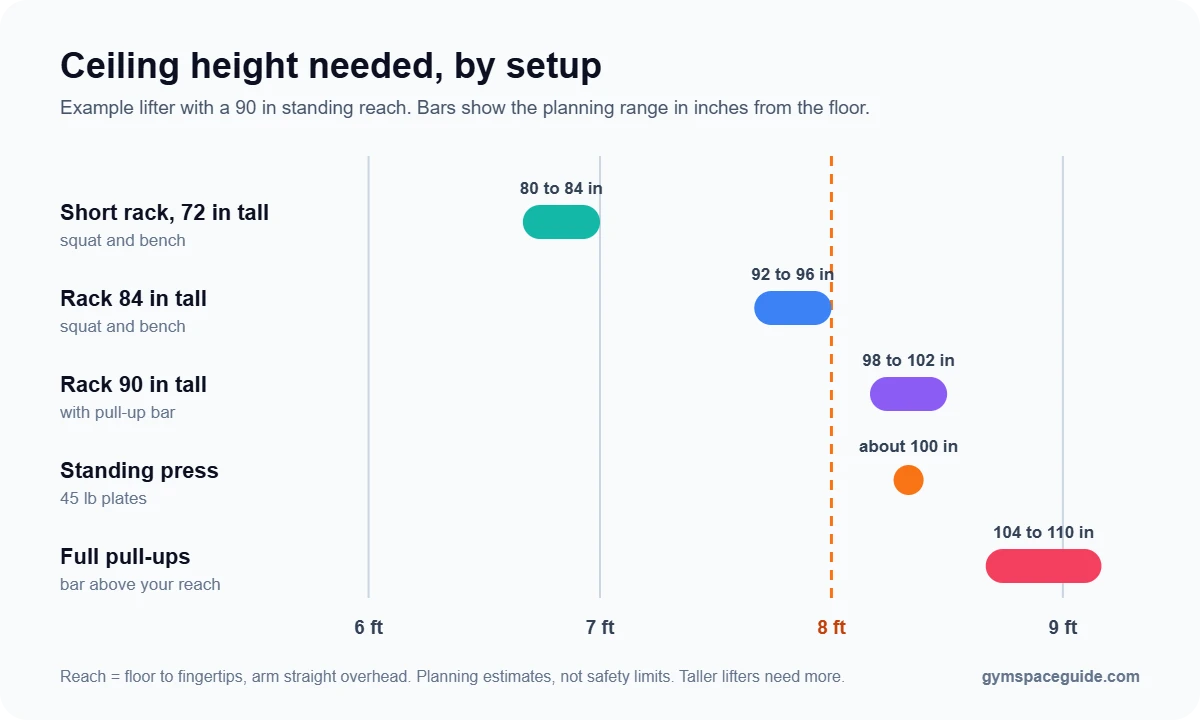
| What you do | Ceiling to plan for | Where the number comes from |
|---|---|---|
| Squat and bench in a short rack, about 72 in tall | 80 to 84 in (6 ft 8 in to 7 ft) | Rack height plus 8 to 12 in, the allowance one rack maker states |
| Squat and bench in a rack about 84 in tall | 92 to 96 in (7 ft 8 in to 8 ft) | Same allowance |
| Full rack about 90 in tall, pull-up bar on top | 98 to 102 in (8 ft 2 in to 8 ft 6 in) | Same allowance |
| Standing overhead press with 45 lb plates, 90 in reach | About 100 in (8 ft 4 in) | Standing reach plus about 10 in, our estimate |
| Full pull-ups, 90 in reach | 104 to 110 in (8 ft 8 in to 9 ft 2 in) | Bar a couple of inches above your reach, plus 12 to 18 in of head room |
| Olympic lifts such as the snatch | 10 ft or more | One retailer guide; we found no published standard |
These are planning numbers, not safety limits. Reach means floor to fingertips with one arm straight overhead, so measure yours before you trust the rows that use it. Plan for the tallest person who will train.
Why do people say 8 feet, and what does the building code say?
Eight feet is the figure most guides and makers land on. Life Fitness Australia gives about 8 ft (2.4 m) as the minimum for a squat rack. A 7 ft garage door with torsion springs also needs about 8 ft of ceiling at the door, because Clopay asks for 12 in of headroom above the opening.
The building code sets a lower number. Under the model residential code (IRC R305.1), habitable rooms need a 7 ft ceiling. Basements with no habitable space need 6 ft 8 in, and beams, girders and ducts in basements may hang down to 6 ft 4 in.
Those figures keep people from hitting their heads as they walk through a room. They say nothing about a bar overhead, and a 90 in rack does not fit under a legal 7 ft ceiling. Your city may amend the model code, so check local rules if you are finishing a room.
How do you measure your real ceiling height?
Measure from the floor to the lowest thing above the spot where you will lift, then subtract what you will add to the floor.
- Measure at the rack’s spot, not the middle of the room. Run the tape up to the lowest joist, duct, pipe or light over the rack and over the space in front of it.
- Check the garage door path. Tracks, springs and the opener hang below the ceiling. Clopay measures headroom to the ceiling or the first obstruction, such as a light fixture.
- Subtract your flooring. Rubber takes 3/8 to 3/4 in, and a lifting platform adds about 1.5 in. Our guide to garage gym flooring thickness has the numbers.
- Measure your standing reach. Stand flat on the floor, raise one arm straight up and measure to your fingertips.
Example: a 96 in ceiling with 3/4 in mats leaves 95 1/4 in. A 90 in rack under it leaves 5 1/4 in. The Ceiling Check on our home page runs the same subtraction for you.
How much ceiling height does each lift need?
Three rules cover most setups. Each is a planning estimate, so test it with an empty bar or a broom handle before you buy.
Racks: rack height plus 8 to 12 inches
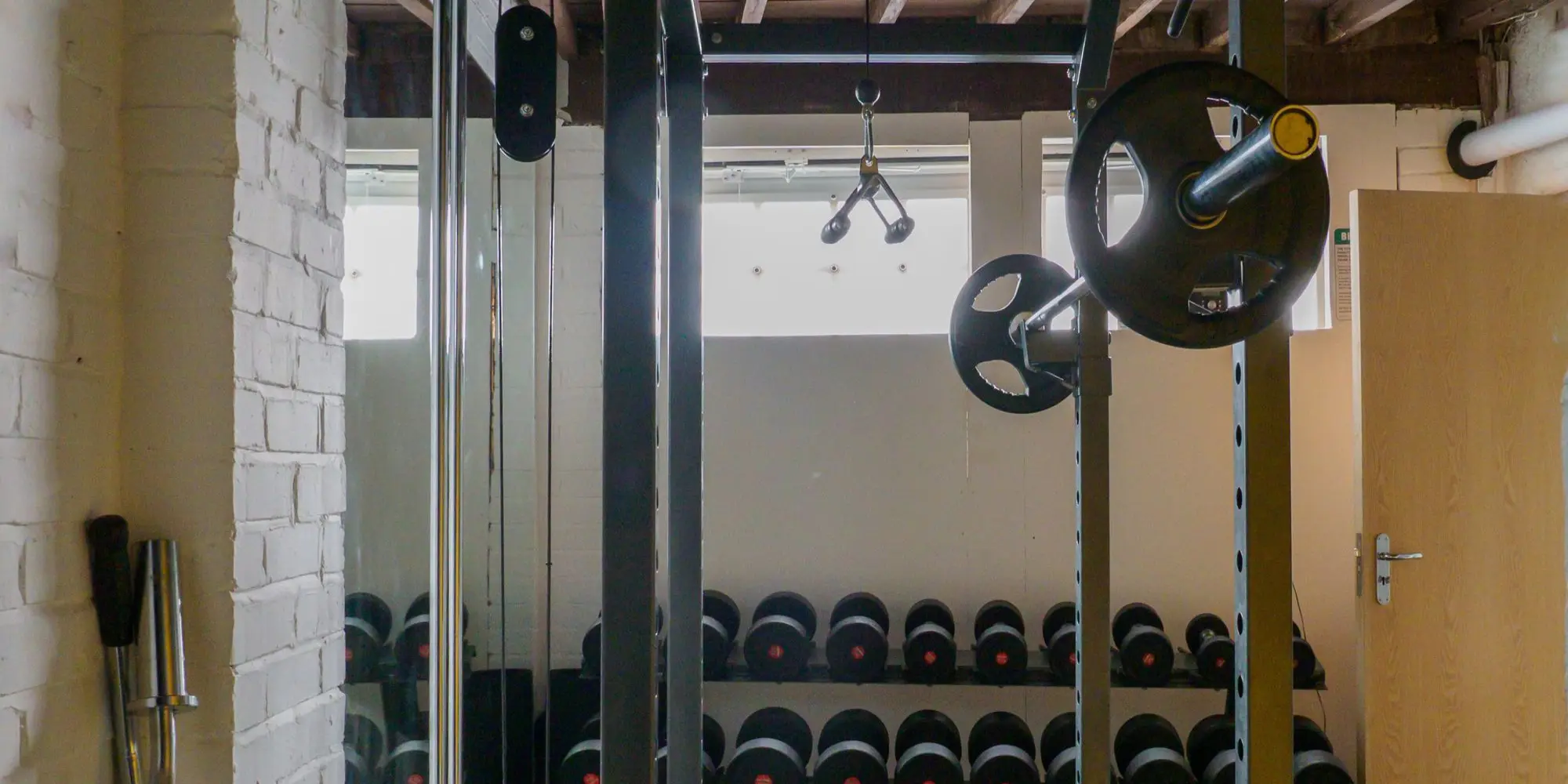
Strength Shop, a rack maker, says you need around 20 to 30 cm (about 8 to 12 in) above a rack’s stated height to stand at it, load the bar overhead and do pull-ups without hitting the ceiling. Its own 1,800 mm (70.9 in) rack needs 200 to 210 cm of ceiling. We apply the same allowance to other makers’ listed heights. If you only squat and bench, you can get by with less, but keep a few inches over the rack so you can stand the uprights and move around it.
Overhead press: reach plus about 10 inches
At lockout your hands sit a few inches below your fingertip reach, and the plates add height. A 45 lb bumper plate is 450 mm (17.7 in) across, so its top edge rises about 9 in above the bar’s center. Add roughly 5 in of margin and you get your standing reach plus about 10 in. With a 90 in reach, plan for about 100 in. If the ceiling is lower, press seated on a bench.
Pull-ups: reach plus 14 to 20 inches
Set the bar a couple of inches above your reach so you can hang with straight legs and your feet off the floor. Then leave room for your head to clear the bar. Gymcrafter suggests 18 in above the bar, and GXMMAT suggests 12 to 18 in. With a 90 in reach, a bar at 92 in needs a ceiling of 104 to 110 in.
Olympic lifts such as the snatch need more. One retailer guide puts them at 10 ft or more, and we found no published standard.
Which racks fit under a 7, 8 or 9 foot ceiling?
Here is the same allowance applied to racks whose makers publish a height. The last column adds 8 to 12 in to the listed height, except for the Strength Shop rack, where the maker gives its own number.
| Rack | Listed height | Ceiling to plan for |
|---|---|---|
| Strength Shop Garage-height rack | 1,800 mm (70.9 in) | 200 to 210 cm (78.7 to 82.7 in), per the maker |
| REP PR-1050 short rack | About 6 ft (72 in) | About 80 to 84 in |
| Rogue R-3, shorty height | 84 3/8 in | About 92 3/8 to 96 3/8 in |
| Rogue R-3, standard height | 90 3/8 in | About 98 3/8 to 102 3/8 in |
| REP PR-5000, tall option | 93 in | About 101 to 105 in |
Under a 96 in ceiling, the standard R-3 leaves 5 5/8 in before flooring. That is enough to squat and bench. It is tight for pull-ups from the top bar, and for most adults it is too little for a standing press. Makers change heights and options, so confirm on the product page before you buy.
What changes in a garage?
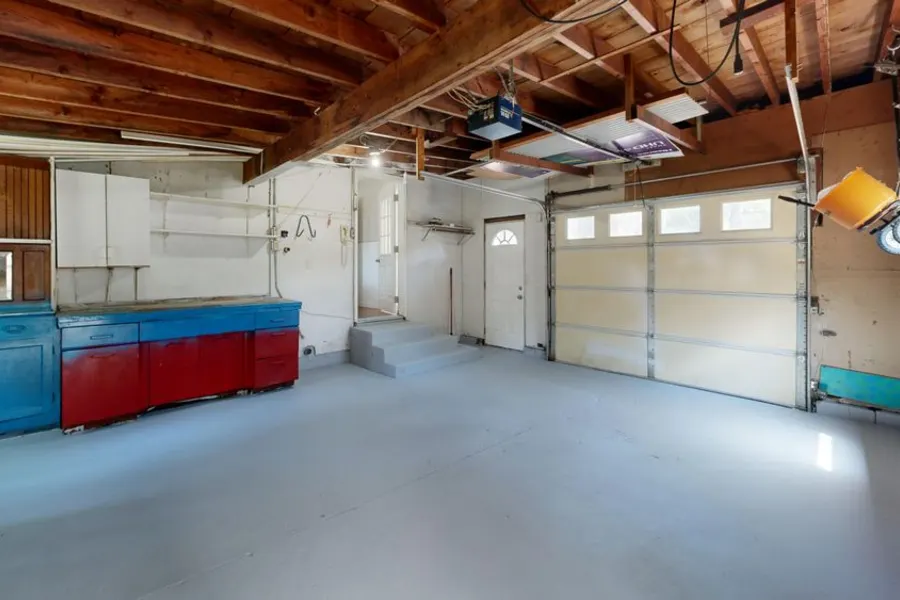
A garage ceiling looks tall until you find the hardware. Clopay lists the headroom a door needs above its opening: 10 in for extension springs and 12 in for torsion springs. An opener needs more, and low-headroom kits can cut the door’s own need to about 4 1/2 in.
A 7 ft door with torsion springs therefore needs about 8 ft of ceiling at the door end, which is one reason garage ceilings often sit near 8 ft. The tracks, springs and opener hang below that ceiling. Keep the rack’s overhead zone away from them, and measure to the lowest part, not to the drywall.
What changes in a basement?
In a basement the limit is often a duct or beam, not the ceiling. The model code lets beams, girders and ducts hang down to 6 ft 4 in (76 in) in basements. A 90 in rack cannot stand under a duct at that height.
Look for the joist bay with the most clear height, and measure along the whole lift path, including the space in front of the rack where you walk the bar out. If you are finishing a basement room, ask your local building department which code edition applies.
What if your ceiling is too low?
You still have options when the numbers do not work.
- Use a short rack or squat stand. Racks around 72 in tall, such as REP’s PR-1050, fit a 7 ft ceiling with room to spare.
- Try a wall-mounted or folding rack. With no fixed overhead frame, the ceiling matters less. Strength Shop says its folding wall rack works from about 190 cm (75 in) of ceiling.
- Put the pull-up bar somewhere else. Bells of Steel suggests mounting a standalone bar on a wall or ceiling where the clearance is better, so the rack can stay short.
- Press seated. A bench inside the rack lowers the lockout, so it needs less ceiling than a standing press.
- Move the rack. Put it under the highest part of the ceiling, away from beams, ducts and door tracks.
Raising a ceiling or notching joists is structural work. Ask a licensed contractor and your local building department, and do not cut framing yourself.
Ceiling height checklist
- Measure floor to the lowest obstruction at the rack’s spot.
- Subtract your flooring and any platform.
- Measure the tallest lifter’s standing reach.
- Add 8 to 12 in to the rack’s listed height if you press or hang from it. Keep a few inches over it if you do not.
- Check whether the listed height includes the pull-up bar.
- Keep door tracks, the opener and ducts out of the rack’s overhead zone.
Common mistakes
- Using the code minimum as a training minimum. A 7 ft ceiling is legal for a living room. A 90 in rack does not fit under it.
- Forgetting the floor. Mats and platforms take 3/8 to 1 1/2 in off every number above.
- Planning for the shortest user. The tallest lifter sets the reach and the pull-up clearance.
- Trusting a listed height blindly. Makers differ on whether the pull-up bar is included.
- Ignoring door hardware and ducts. They hang below the ceiling you measured.
FAQs
What is the minimum ceiling height for a home gym?
8 feet is the practical minimum for a rack with a pull-up bar. A 7 ft ceiling works with a short rack of about 72 in. The code minimum of 7 ft for living space says nothing about lifting.
Is a 7 foot ceiling enough for a home gym?
Yes for a short rack, squats, bench presses and dumbbells. Most adults will not fit a standing press or full pull-ups, so plan a seated press and a pull-up bar elsewhere.
How much ceiling height do you need for a squat rack?
The rack’s listed height plus 8 to 12 in if you press or hang from it. If you only squat and bench, keep at least a few inches above the rack.
How much ceiling height do you need for pull-ups?
Your standing reach plus about 14 to 20 in. Sources suggest 12 to 18 in above the bar for your head.
How much ceiling height do you need for an overhead press?
Your standing reach plus about 10 in with 45 lb plates. With a 90 in reach, that is about 100 in.
Do you subtract flooring from the ceiling height?
Yes. Rubber flooring takes 3/8 to 3/4 in and a lifting platform about 1.5 in.
How we wrote this guide
This guide draws on maker specifications (Rogue, REP Fitness and Strength Shop), Clopay’s garage door headroom figures, summaries of IRC section R305 and published coaching guidance. Where sources disagree, we say so. Specs were checked in November 2026 and can change. The reach-based rules are our own planning estimates built from those figures, not an industry standard. If a plan involves cutting joists, moving ducts or raising a ceiling, ask a licensed contractor.
Sources
- Rogue Fitness: R-3 Power Rack
- REP Fitness: rack dimensions (PR-1050, PR-5000)
- REP Fitness: pre-selected racks
- Strength Shop: No High Ceilings? No Problem, The Best Racks for Garage Gyms
- Rogue Fitness: Black Training LB Plates (450 mm diameter)
- Clopay: residential garage door FAQ (headroom)
- Clopay: garage door FAQ (opener headroom)
- Clopay: installation overview (measuring headroom)
- Hunker: Garage Door Clearance Requirements
- City of Boise: IRC section R305, ceiling height
- Greenlancer: IRC R305.1 basement ceiling height code
- Life Fitness Australia: How big does a home gym need to be?
- Gymcrafter: How to do pull-ups in gyms with low ceilings
- GXMMAT: Stop smashing your ceiling
- Bells of Steel: Home gym for a tall person
- CTX Home Gyms: Basement home gym essentials
Is your ceiling lower than these numbers?
Tell me what you are working with, such as the ceiling height, the rack you want or the lowest obstruction, and I will consider it for a future guide.
Write to me