Insulation
Should I Insulate My Garage Gym? What Changes and What Doesn’t
In the two-car example, four insulation jobs cut heat loss 83%, from 30,413 to 5,039 BTU an hour. Walls save the most.
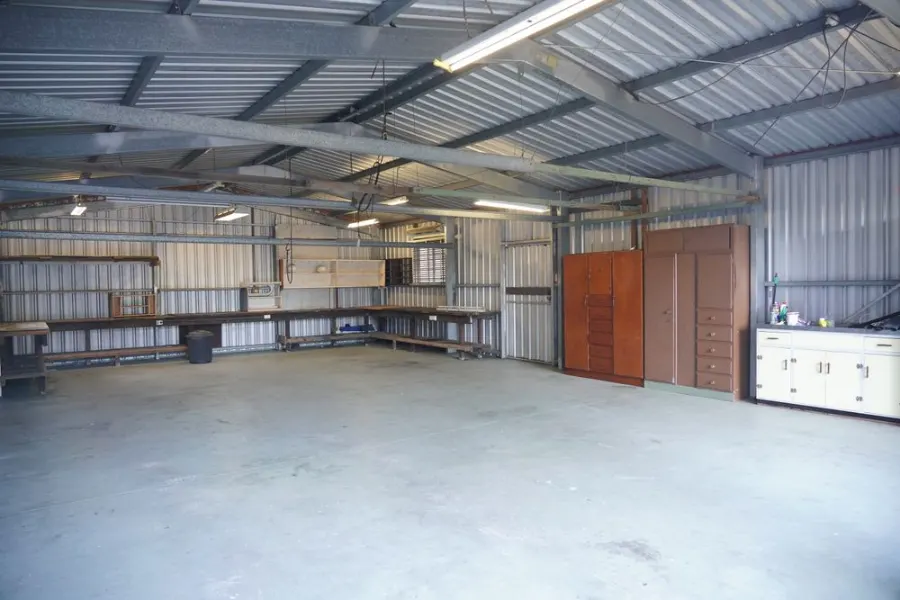
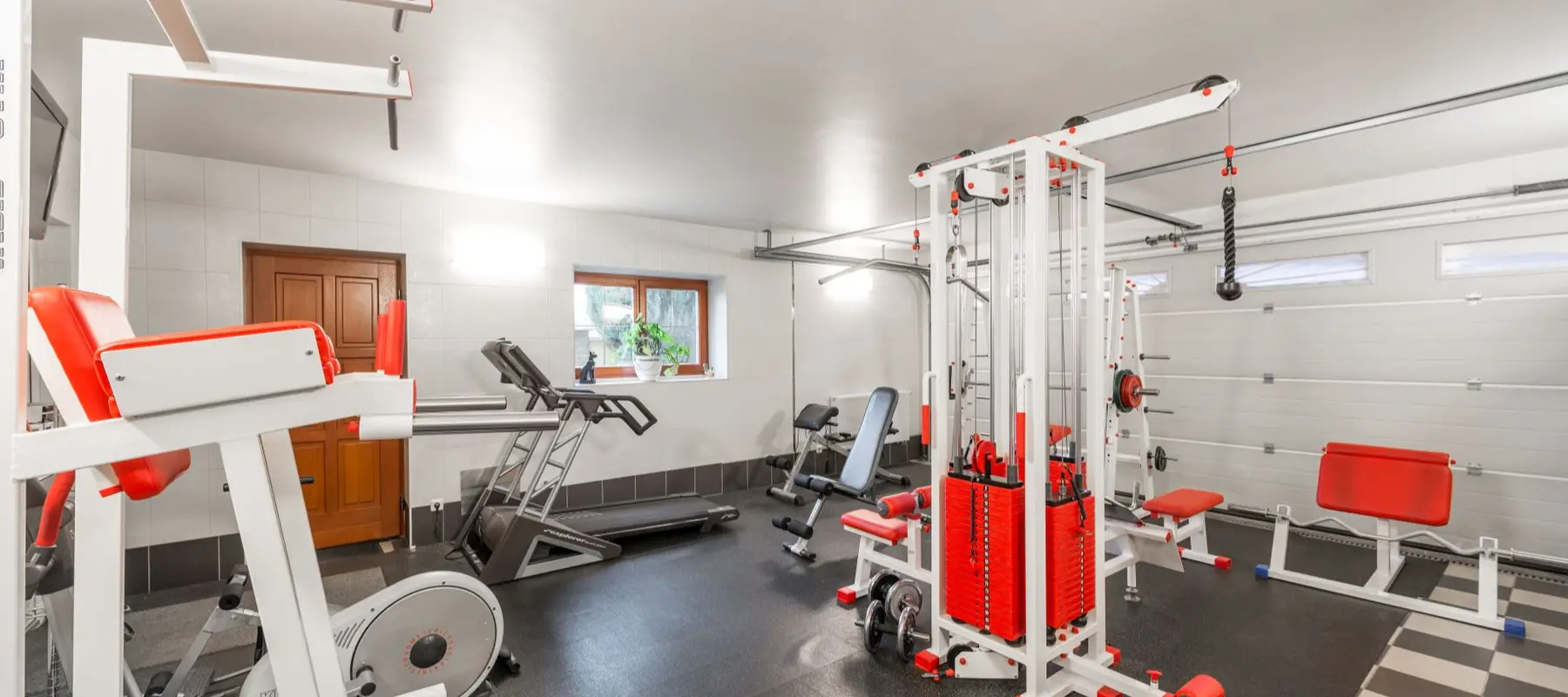
A heater only replaces the heat a garage loses, so the shell matters before the heater does. Should I insulate my garage gym? Usually yes, if you will heat or cool it and the shell is bare.
Insulation does not make heat. It slows how fast heat leaves: in the two-car example below, a bare garage loses heat six times faster than an insulated one. Every figure is my own calculation, not a test; how we evaluate guides explains the checks.
Walls shared with the house follow local fire rules, so check before you open or cover them. Heater sizing lives in the Climate guides.
Do you need to insulate a garage gym?
You need it when you will heat or cool the garage for weeks each year and its walls, ceiling and door are bare. In the two-car example, four insulation jobs cut the load 83%, from 30,413 to 5,039 BTU an hour. That gap decides how big a heater or cooler you must buy.
Three signs the answer to “should I insulate my garage gym?” is yes:
- You train through winter or summer, not just spring
- Your walls, ceiling and door have no insulation
- You have not bought a heater or cooler yet, so a smaller one may do
Delay it if a damp slab or roof leak is the real problem, because insulation does not cure moisture. Skip it if mild weather means you would never run a heater or cooler.
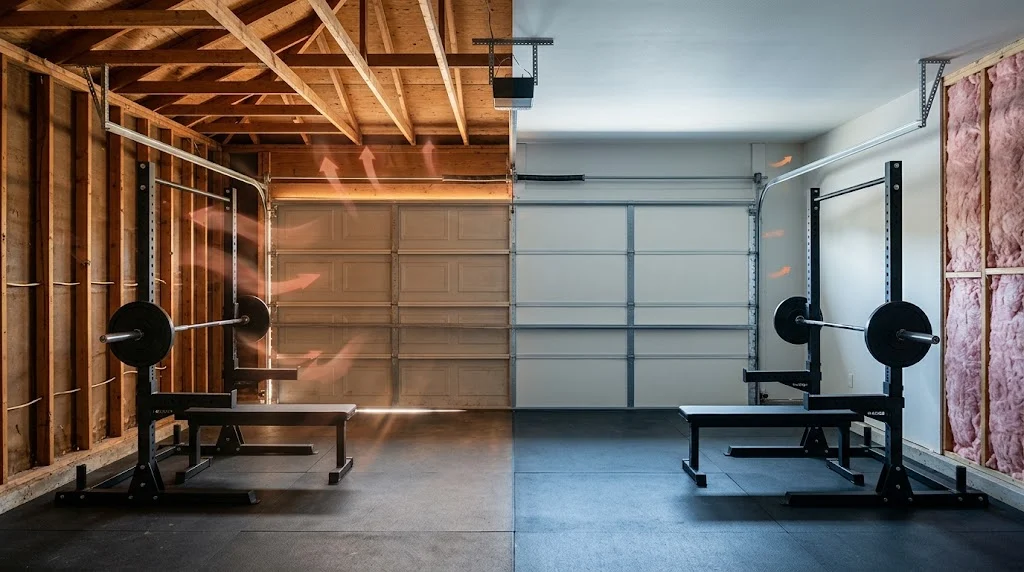
Which insulation job saves the most heat?
In the bare two-car example, walls save the most heat, then the ceiling, the door and gap sealing. The door leaks most per square foot but is the smallest surface. If two jobs cost the same, do the bigger saving first.
| Upgrade | Saves, BTU/h |
|---|---|
| Walls, R-2 to R-12 | 9,680 |
| Ceiling, R-2 to R-30 | 8,213 |
| Door, R-1 to R-8 | 4,312 |
| Gap sealing, 2 to 0.75 air changes an hour | 3,168 |
My own calculation: 20 × 20 ft garage, 8 ft walls, 16 × 7 ft door, 55°F inside, 15°F outside, 10% allowance. R-values are planning values. One air change replaces the garage’s air once.
Should you insulate the garage door?
A garage door with no insulation is worth upgrading, though it saves less than the walls or ceiling. Per square foot the door saves the most: about 39 BTU an hour, against 21 for the ceiling and 18 for the walls. With only 112 square feet, it saves 4,312 BTU an hour.
Why seal gaps before insulating?
Seal gaps first: weatherstripping, a door bottom seal, caulk. Insulation slows heat passing through a wall, not air blowing through gaps, and gaps are hard to reach behind finished walls. A tighter garage also gives a fuel-burning heater less air, so follow its manual and compare propane and electric garage heaters.
Does your garage type or climate matter?
Garage type and climate both change what each insulation job is worth. My sums assume four outside walls and a plain box. Savings also scale with the temperature gap between inside and outside: a 20°F gap halves every figure, and a 60°F gap multiplies it by 1.5.
An attached garage loses less than my sums show, because the house side of a shared wall is warmer than outdoors. Treat its totals as an upper bound. A detached garage has no warm neighbor, so every job counts in full.
In a cold climate, heat loss dominates, so insulate before you size a heater. In a hot climate, insulation slows heat flowing in, but sun on the roof and door adds heat my sums leave out, and a closed garage can hold it overnight. In a mild climate, every saving shrinks, so only the cheapest jobs may be worth doing. The hot and mild cases are my judgment, not a calculation.
Which insulation material fits which job?
Match the material to the space, not to a brand. Batts fit stud and joist bays, rigid foam board suits thin spaces, spray foam seals odd gaps, and reflective foil mostly helps against radiant heat. Whatever you pick, the label R-value and local fire rules come first.
| Material | Where it fits | Watch for |
|---|---|---|
| Batts (fiberglass or mineral wool) | Stud and joist bays | Compression and moisture cut the R-value |
| Rigid foam board | Thin spaces, under joists | Label or local rules may require a covering |
| Spray foam | Gaps and odd shapes | Large jobs usually need a professional |
| Reflective foil | Sunlit roofs, radiant heat | Not a winter substitute for R-value |
Start with the cavity depth. A 2×4 stud wall holds a thinner batt than a 2×6 wall, so the framing caps the wall R-value you can fit. If the cavity is too shallow, foam board over the studs adds R-value, subject to the covering rules.
What does insulation not change?
Insulation changes how fast heat moves through a garage, and nothing else. You still need a heat source, a slab that passes a moisture test and a floor you like underfoot. Each has its own fix, and none is more insulation.
Will it warm a garage by itself?
Insulation does not warm a garage by itself; with no heat source, the room still drifts toward the outdoor temperature, only more slowly.
In the two-car example, a 1,500-watt heater lifts a bare garage 6.7°F, to 21.7°F on a 15°F day. It lifts the insulated garage 40.6°F, to 55.6°F, because the bare one leaks heat six times faster.
Real warm-up takes hours while concrete and steel soak up cold. Before adding heat, see garage circuit limits for a space heater.
Does it fix a damp or cold floor?
Wall and ceiling insulation does not stop moisture rising through the slab, and it does not warm the floor underfoot. A damp slab stays damp however thick the walls are, so test it before choosing a floor.
Cold concrete is a flooring choice, so compare garage gym floor types once the slab passes.
FAQ
Is a garage door insulation kit worth it?
A garage door insulation kit helps if the maker states its R-value and you seal the door’s gaps first. It is not for a door that is already insulated or one the maker limits on weight, because extra weight can unbalance the springs.
What R-value do you need for garage walls?
No single R-value fits every garage wall; depth, climate and local rules set it. In my two-car model, R-12 saves 9,680 BTU an hour over a bare wall, while R-19 would add only 713 more. Check the label and local rules.
Can you insulate a garage without drywall?
Only where local rules allow it. Foam often must be covered, and walls shared with the house usually need fire-rated drywall, so ask your building department. A covering costs headroom; measure under the door tracks, as in a home gym with a 7-foot ceiling.
Do you need to insulate the garage ceiling?
Insulate it in most heated garages with an attic or a room above. In the two-car example the ceiling is the second-biggest saving, 8,213 BTU an hour. A finished ceiling costs headroom, so check rack clearance in how much ceiling height a home gym needs.
Cheapest way to insulate a garage gym?
The cheapest first step is sealing gaps, which usually uses the least material and saves 3,168 BTU an hour in the two-car example. Then do whichever job has the lowest quote per BTU an hour saved. Prices vary by region, so get written quotes.
Final thought
Insulate when you will heat or cool the garage, and start with the job that saves the most per dollar. Run the sums for your own walls, door and winter in the BTU sizing guide for garage gyms. Expect a smaller heater, not a heater-free room.
More planning guides sit on the guides page.
How we wrote this guide
Every number comes from standard conversion factors and planning R-values, run through one model I also use for heater sizing. Each calculation is my own. I have not tested any insulation, door or garage. Assumptions are labeled, and fire, wall and moisture rules vary by location. I wrote it so you can decide on insulation before you spend on heat or cooling.
Is your garage different from this one?
Send your garage size, insulation and coldest training day, and I will tell you which numbers to check.
Write to me